Buy wageningenuniversity.eu ?
We are moving the project
wageningenuniversity.eu .
Are you interested in purchasing the domain
wageningenuniversity.eu ?
domain@kv-gmbh.de · 0541-91531010
Buy wageningenuniversity.eu ?
What does René Magritte like?
René Magritte was known for his love of creating thought-provoking and enigmatic artworks that challenged the viewer's perception of reality. He enjoyed exploring the concept of the hidden and the visible, often using ordinary objects in unexpected ways to create a sense of mystery and intrigue. Magritte also had a fascination with the relationship between words and images, often incorporating text into his paintings to add another layer of meaning. Overall, Magritte liked to push the boundaries of traditional artistic representation and provoke contemplation in his audience. **
What is the art of René Magritte?
René Magritte was a Belgian surrealist artist known for his thought-provoking and enigmatic paintings. His art often featured ordinary objects in unusual contexts, challenging the viewer's perception of reality. Magritte's work often explored the themes of identity, perception, and the relationship between words and images. His use of juxtaposition, visual puns, and dream-like imagery created a sense of mystery and intrigue in his paintings. **


Similar search terms for Magritte
Top-Angebote
Products related to Magritte:
-
Research-powered Eye Duo - Skincare Kit Charlotte Tilbury 2896 Charlotte's Research-powered Eye Duo Size:Darlings, unlock the secret to eyes that appear brighter, depuffed, smoother and younger with my Research-Powered Eye Duo! This CharlotteTilbury.com EXCLUSIVE skincare duo includes:94,05 £*Shipping: 0,00 £Secure redirect to the provider
-
Board and Dice Nucleum Energy Research Institute Board Game - Strategic Economic Board Game with Energy Networks and Research DevelopmentBuild an industrial empire in an alternate twentieth century transformed by the Uranium Revolution. Compete to develop powerful energy networks, attract investment, and earn the support of influential patrons. Plan routes, expand research, and connect cities as you develop increasingly ambitious technologies. Every decision affects progress, from constructing facilities to pursuing contracts and partnerships. Resource management and long-term planning are essential to succeed.21,79 £*Shipping: 3,95 £Secure redirect to the provider




-
'How do I find this painting by Magritte?'
To find a painting by Magritte, you can start by searching for the specific title of the painting or the name of the collection it is a part of. You can also search for the painting in online art databases, museum websites, or auction house catalogs. If you have a specific museum or gallery in mind where the painting may be displayed, you can contact them directly to inquire about the painting's availability for viewing. Additionally, you can reach out to art dealers or experts who specialize in Magritte's work for assistance in locating the painting. **
-
Why is this painting by René Magritte exactly surrealistic?
This painting by René Magritte is exactly surrealistic because it presents a seemingly ordinary scene with a twist that defies logic and reality. The juxtaposition of the oversized green apple in front of the face of a man creates a sense of unease and confusion, challenging the viewer's perception of space and scale. The use of everyday objects in an unexpected context and the dreamlike atmosphere evoke a sense of mystery and the subconscious, which are key elements of surrealism. Additionally, the precise and realistic rendering of the objects adds to the uncanny and surreal quality of the painting. **
-
What did René Magritte want to express with his paintings?
René Magritte wanted to challenge the viewer's perception of reality and provoke them to question the meaning of everyday objects and images. Through his surrealist paintings, he aimed to create a sense of mystery and intrigue by juxtaposing familiar elements in unexpected ways. Magritte often used visual paradoxes and wordplay to explore the relationship between language and image, inviting viewers to engage with his work on a deeper, more philosophical level. **
-
By whom was the area created in 1957 by René Magritte?
The area created in 1957 by René Magritte is the painting "The Dominion of Light." Magritte was a Belgian surrealist artist known for his thought-provoking and enigmatic works. "The Dominion of Light" is one of his most famous paintings and depicts a mysterious and dreamlike scene of a tranquil street at night with a daytime sky. Magritte's use of juxtaposing elements and his exploration of the subconscious mind make this painting a significant contribution to the surrealist movement. **

What does René Magritte want to convey with the betrayal of images?
René Magritte's "The Treachery of Images" challenges the viewer's perception of reality and the relationship between words and images. By depicting a pipe with the caption "This is not a pipe," Magritte is highlighting the idea that the painting of a pipe is not an actual pipe but a representation of one. He wants to convey the notion that images can deceive us and that what we see may not always be what it seems, urging viewers to question the authenticity and truthfulness of visual representations. **
What comes to mind when you see this picture by René Magritte?
When I see this picture by René Magritte, I am struck by the juxtaposition of the ordinary and the surreal. The image of a pipe with the words "Ceci n'est pas une pipe" (This is not a pipe) challenges our perception of reality and representation. It reminds me of the concept of semiotics and the idea that words and images do not always directly correspond to the objects they represent. Magritte's work often explores the relationship between language and visual representation, and this painting is a thought-provoking example of his exploration of this theme. **
Top-Angebote
Products related to Magritte:
-
Yellow Kite Food Fix by Mark Hyman MD - Paperback - Food Policy, Health & Environment Non-Fiction BookFood Fix by Mark Hyman is a non-fiction paperback book that explores the connection between food and the crises facing society. Written by New York Times best-selling author and physician Mark Hyman, this book argues that fixing our broken food system could have a positive impact on our health, local economies, communities, and the planet. In Food Fix, Hyman lays bare how industrial food and agriculture systems are shaped by powerful financial interests, driving issues such as obesity and type 2 diabetes. This book is essential reading for anyone concerned about the intersection of food, health, and the environment.3,49 £*Shipping: 2,99 £Secure redirect to the provider
-
Research-powered Eye Duo - Skincare Kit Charlotte Tilbury 2896 Charlotte's Research-powered Eye Duo Size:Darlings, unlock the secret to eyes that appear brighter, depuffed, smoother and younger with my Research-Powered Eye Duo! This CharlotteTilbury.com EXCLUSIVE skincare duo includes:94,05 £*Shipping: 0,00 £Secure redirect to the provider
-
Board and Dice Nucleum Energy Research Institute Board Game - Strategic Economic Board Game with Energy Networks and Research DevelopmentBuild an industrial empire in an alternate twentieth century transformed by the Uranium Revolution. Compete to develop powerful energy networks, attract investment, and earn the support of influential patrons. Plan routes, expand research, and connect cities as you develop increasingly ambitious technologies. Every decision affects progress, from constructing facilities to pursuing contracts and partnerships. Resource management and long-term planning are essential to succeed.21,79 £*Shipping: 3,95 £Secure redirect to the provider
-
What does René Magritte like?
René Magritte was known for his love of creating thought-provoking and enigmatic artworks that challenged the viewer's perception of reality. He enjoyed exploring the concept of the hidden and the visible, often using ordinary objects in unexpected ways to create a sense of mystery and intrigue. Magritte also had a fascination with the relationship between words and images, often incorporating text into his paintings to add another layer of meaning. Overall, Magritte liked to push the boundaries of traditional artistic representation and provoke contemplation in his audience. **
-
What is the art of René Magritte?
René Magritte was a Belgian surrealist artist known for his thought-provoking and enigmatic paintings. His art often featured ordinary objects in unusual contexts, challenging the viewer's perception of reality. Magritte's work often explored the themes of identity, perception, and the relationship between words and images. His use of juxtaposition, visual puns, and dream-like imagery created a sense of mystery and intrigue in his paintings. **
-
'How do I find this painting by Magritte?'
To find a painting by Magritte, you can start by searching for the specific title of the painting or the name of the collection it is a part of. You can also search for the painting in online art databases, museum websites, or auction house catalogs. If you have a specific museum or gallery in mind where the painting may be displayed, you can contact them directly to inquire about the painting's availability for viewing. Additionally, you can reach out to art dealers or experts who specialize in Magritte's work for assistance in locating the painting. **
-
Why is this painting by René Magritte exactly surrealistic?
This painting by René Magritte is exactly surrealistic because it presents a seemingly ordinary scene with a twist that defies logic and reality. The juxtaposition of the oversized green apple in front of the face of a man creates a sense of unease and confusion, challenging the viewer's perception of space and scale. The use of everyday objects in an unexpected context and the dreamlike atmosphere evoke a sense of mystery and the subconscious, which are key elements of surrealism. Additionally, the precise and realistic rendering of the objects adds to the uncanny and surreal quality of the painting. **
Similar search terms for Magritte
-
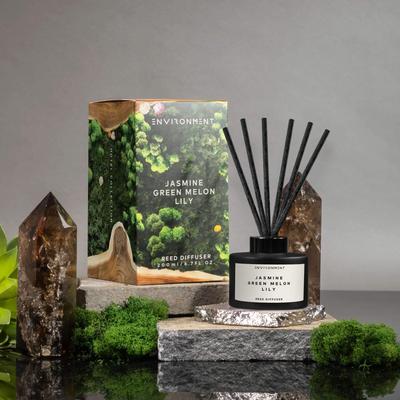
ENVIRONMENT Diffuser Inspired by The Wynn Hotel® - 200mLVegan and cruelty-free. Diffuser that is inspired by The Wynn Hotel®. Juicy green melon and nectarine blend into a heart of jasmine and lily ending with notes of blackberry and oakmoss.39,28 $*Shipping: 0,00 $Secure redirect to the provider
-
What did René Magritte want to express with his paintings?
René Magritte wanted to challenge the viewer's perception of reality and provoke them to question the meaning of everyday objects and images. Through his surrealist paintings, he aimed to create a sense of mystery and intrigue by juxtaposing familiar elements in unexpected ways. Magritte often used visual paradoxes and wordplay to explore the relationship between language and image, inviting viewers to engage with his work on a deeper, more philosophical level. **
-
By whom was the area created in 1957 by René Magritte?
The area created in 1957 by René Magritte is the painting "The Dominion of Light." Magritte was a Belgian surrealist artist known for his thought-provoking and enigmatic works. "The Dominion of Light" is one of his most famous paintings and depicts a mysterious and dreamlike scene of a tranquil street at night with a daytime sky. Magritte's use of juxtaposing elements and his exploration of the subconscious mind make this painting a significant contribution to the surrealist movement. **
-
What does René Magritte want to convey with the betrayal of images?
René Magritte's "The Treachery of Images" challenges the viewer's perception of reality and the relationship between words and images. By depicting a pipe with the caption "This is not a pipe," Magritte is highlighting the idea that the painting of a pipe is not an actual pipe but a representation of one. He wants to convey the notion that images can deceive us and that what we see may not always be what it seems, urging viewers to question the authenticity and truthfulness of visual representations. **
-
What comes to mind when you see this picture by René Magritte?
When I see this picture by René Magritte, I am struck by the juxtaposition of the ordinary and the surreal. The image of a pipe with the words "Ceci n'est pas une pipe" (This is not a pipe) challenges our perception of reality and representation. It reminds me of the concept of semiotics and the idea that words and images do not always directly correspond to the objects they represent. Magritte's work often explores the relationship between language and visual representation, and this painting is a thought-provoking example of his exploration of this theme. **
* All prices are inclusive of VAT and, if applicable, plus shipping costs. The offer information is based on the details provided by the respective shop and is updated through automated processes. Real-time updates do not occur, so deviations can occur in individual cases. ** Note: Parts of this content were created by AI.